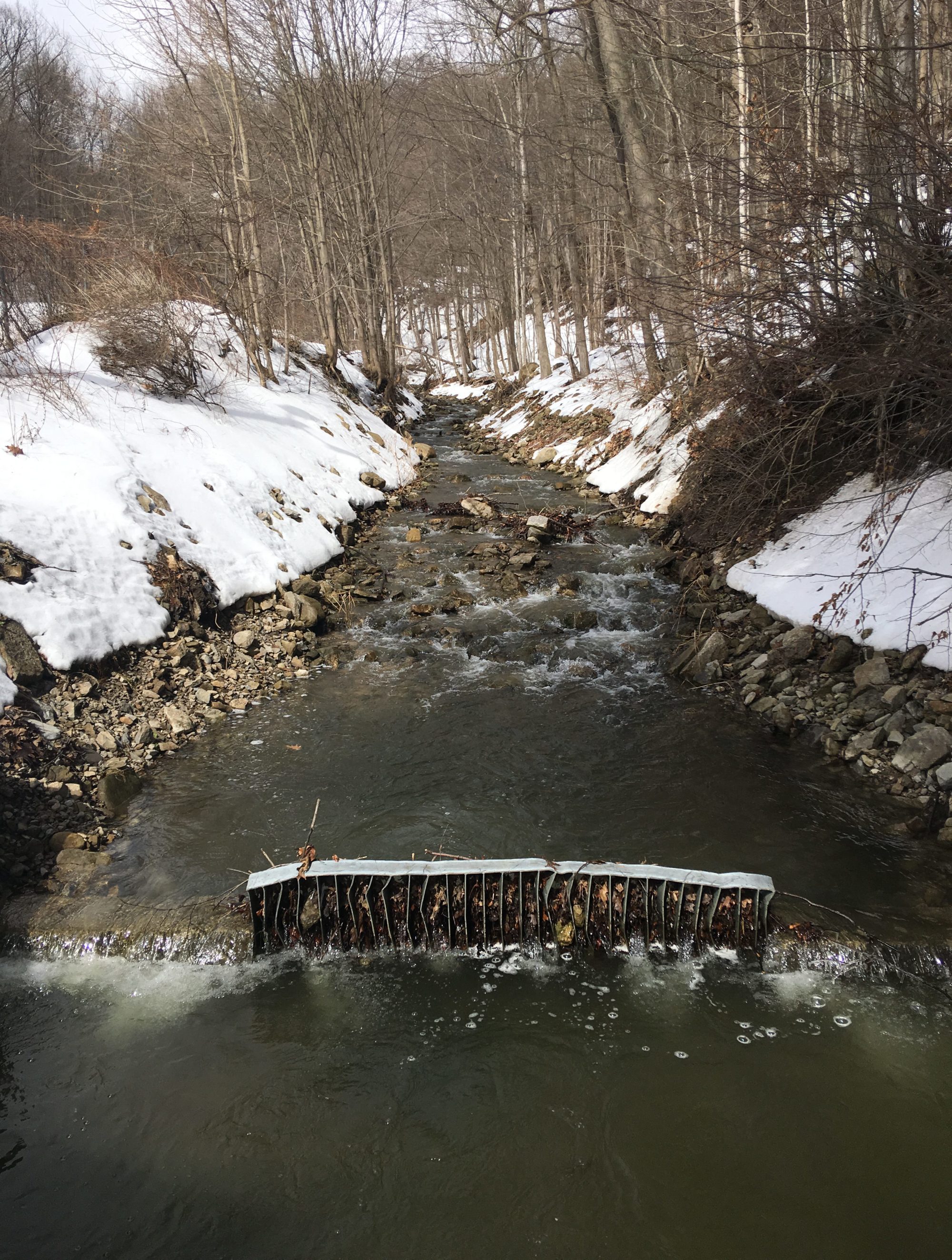
Lynn and I had been to Philadelphia a few times. We had taken the kids to do the usual touristy things (Liberty Bell and Independence Hall) but we had never spent more than 24 hours there. This time would be different. There were a few new museums we wanted to see, restaurants we wanted to try and most of all a walking tour we wanted to go on.
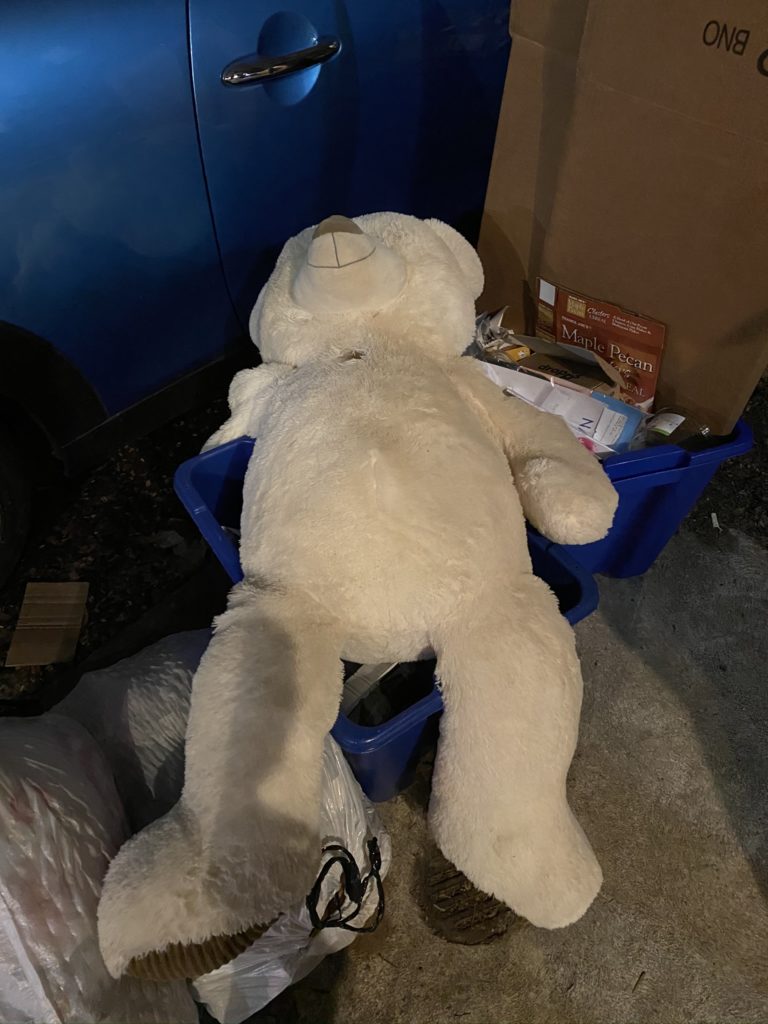
First thing I have to mention though is how incredibly dirty Philadelphia seemed. I started researching this and it’s been an ongoing problem that doesn’t seem to have gotten any better in posts dating back over a decade. People complain about the trash but nothing seems to have improved! Driving into the city we were baffled by the amount of debris and plastic we saw everywhere. I mean people were even throwing out what looked like a brand new teddy bear! Truthfully it made NYC seem like the cleanest city on earth!
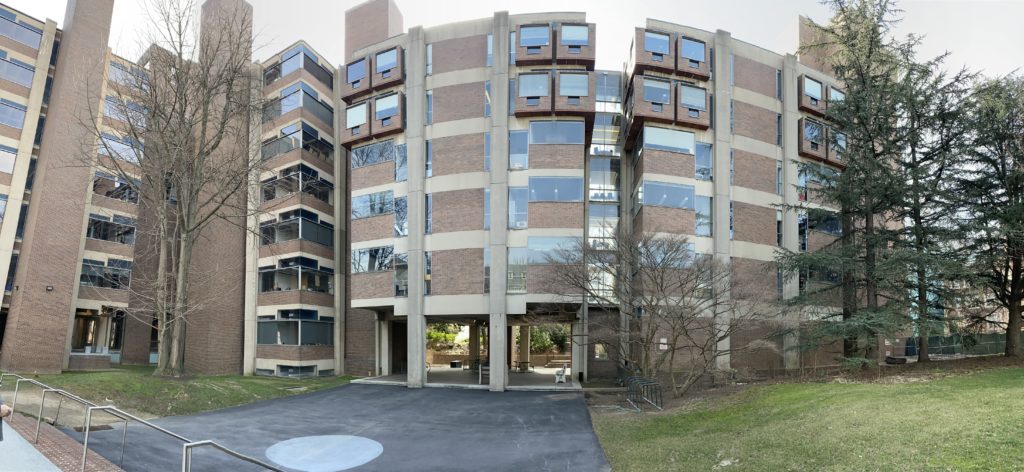
We had tickets to see a new play that weekend but first we visited the University of Pennsylvania to see Louis Kahn’s Richards and Goddard buildings – a medical research lab and classrooms. I’ve found that many of these so-called “modern” buildings of the time (1960) have not weathered well. This seemed in better shape than most but still cement does crumble and steel does corrode.
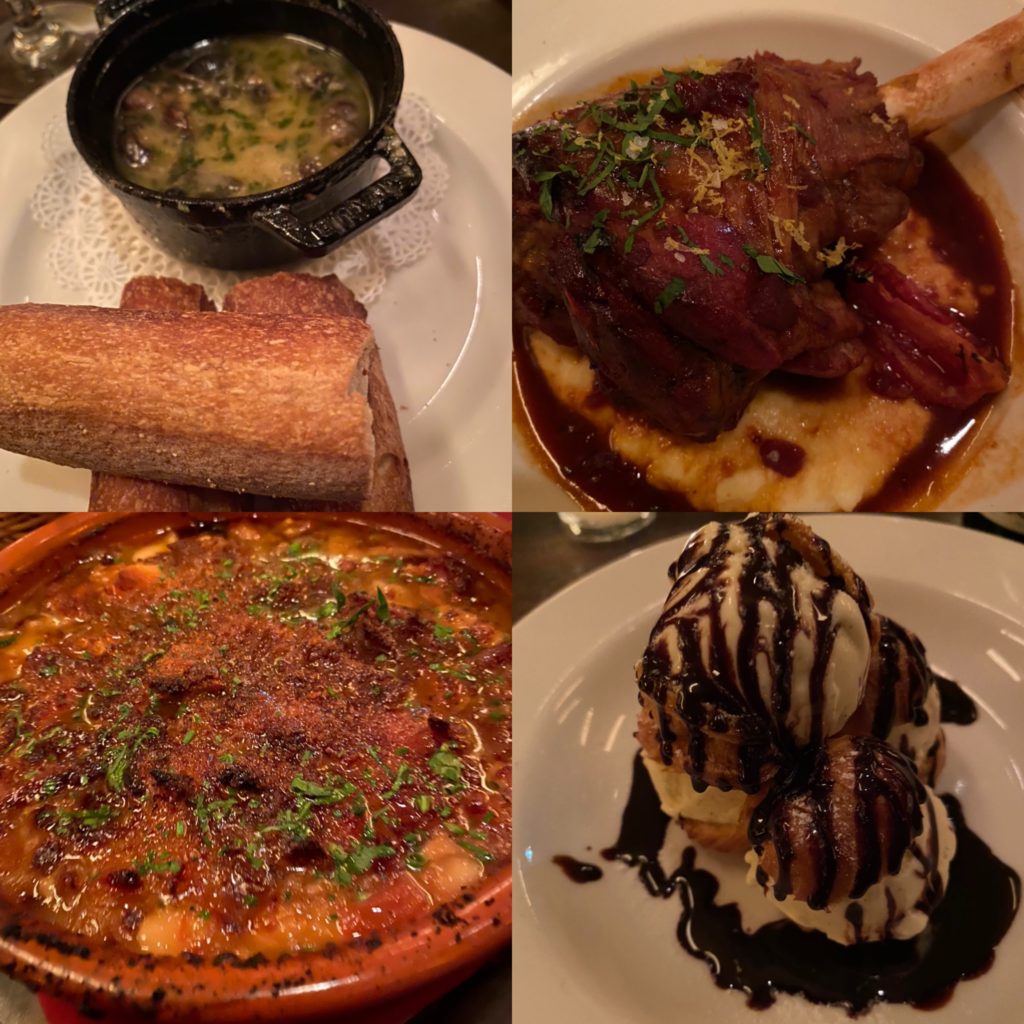
Dinner that night was at a restaurant we had eaten at before. Stephen Starr’s classic take on a French bistro, Parc, located on Rittenhouse Square, never disappoints. Yes, it’s crowded, yes, it’s noisy, but the food is consistently good. Dinner that night: escargots, lamb shank, cassoulet and for dessert a plate of profiteroles.
In the morning we headed over to the Old City and decided to go on a walking tour of the area. We had never done this before and our guide, Craig, was knowledgeable and fun to talk to. We also learned about some of the buildings we had walked by on previous visits. This time their importance during the creation of the Declaration of Independence and the U.S. Constitution was explained to us.
Of course everywhere you go, the majestic tower of City Hall and tributes to one of the Founding Fathers of this country, Benjamin Franklin, are prominent.
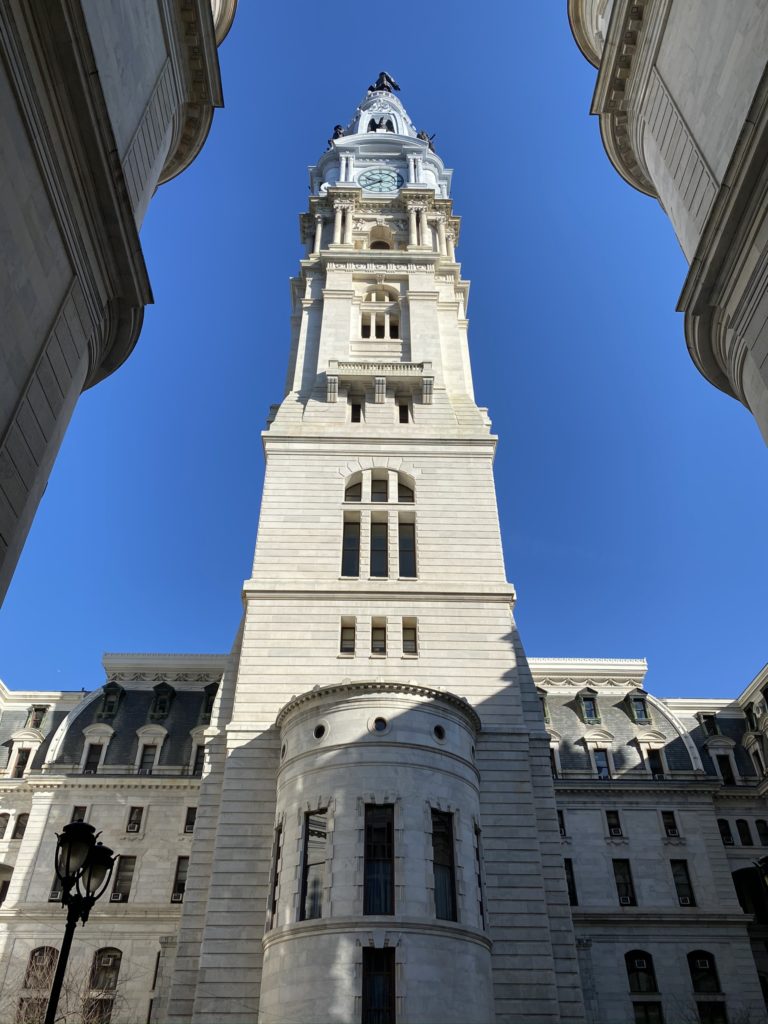
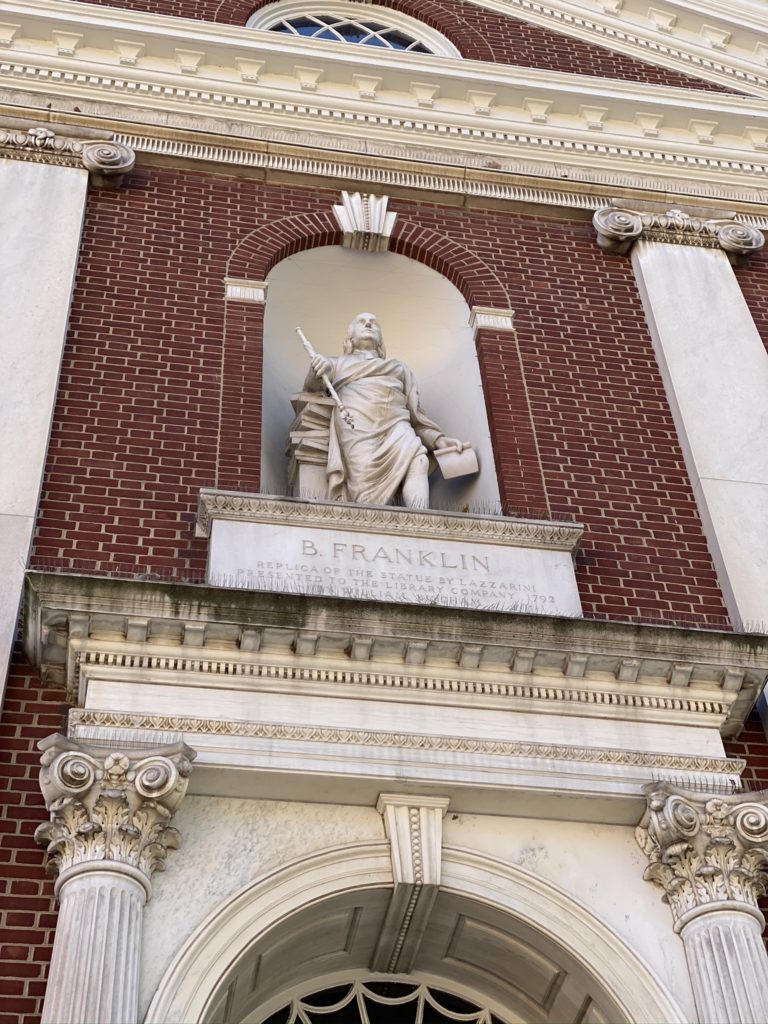
There is also a lot of amazing Greek Revival architecture in Philadelphia. Plus, I’m partial to columns even though I tore down the ones in front of the Red House!
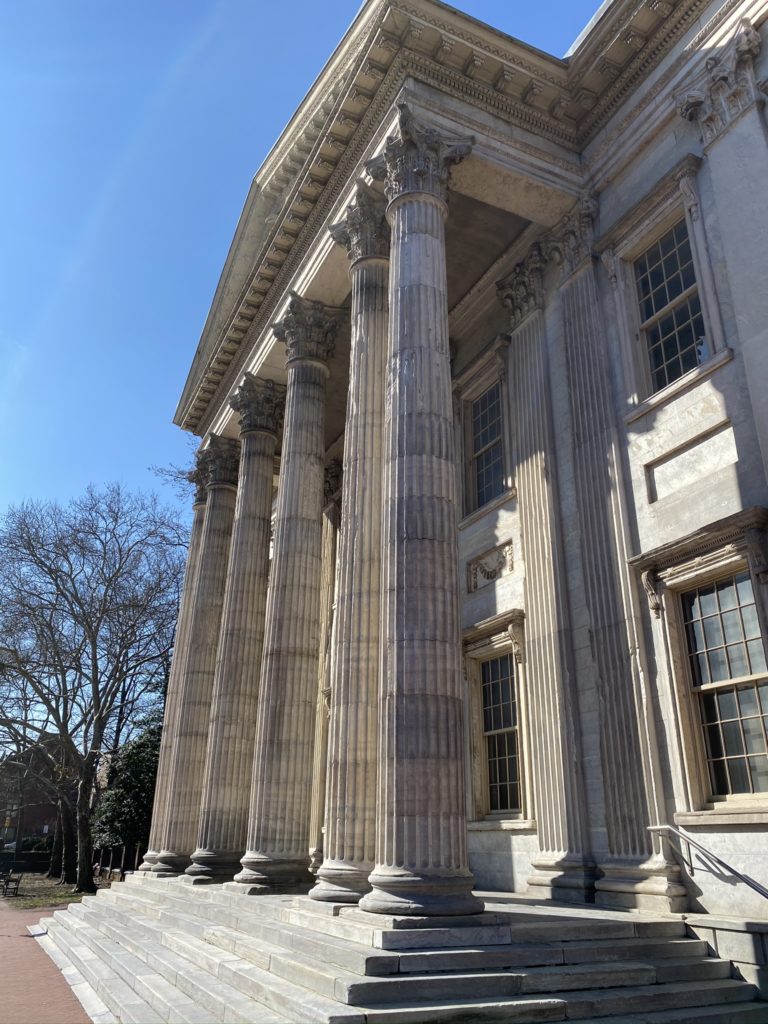
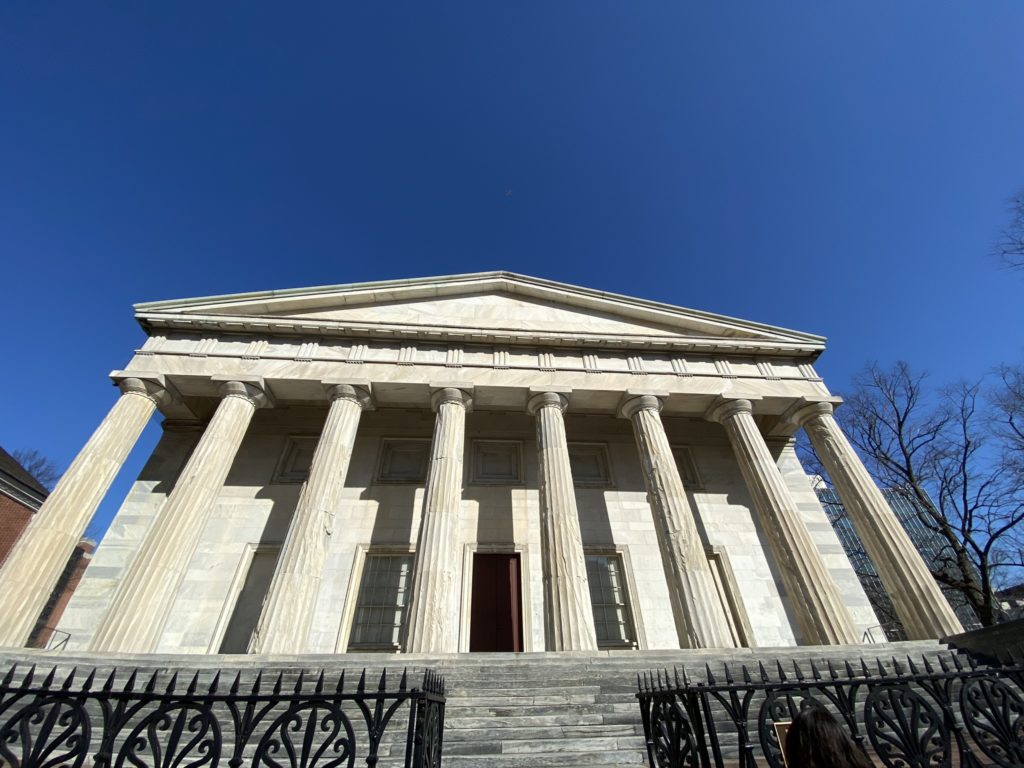
We were introduced to the Second Bank of the United States which now houses a portrait gallery.
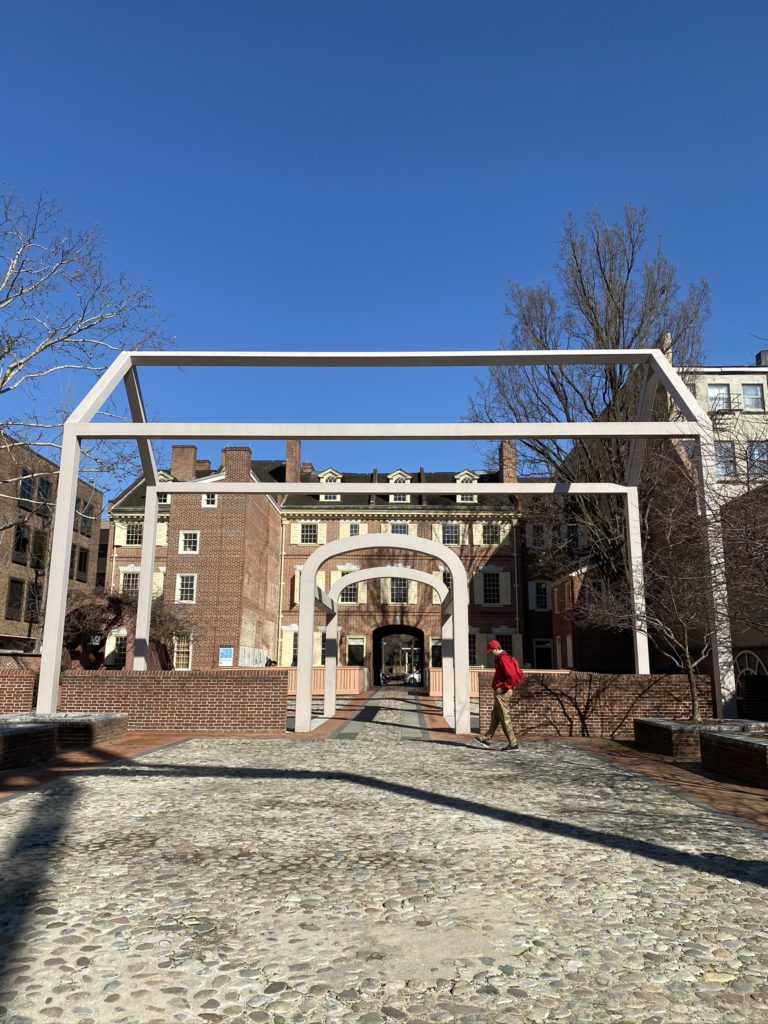
And the site of Benjamin Franklin’s original house (now long gone) but memorialized by architect Robert Venturi as a “ghost structure” in Franklin Court.
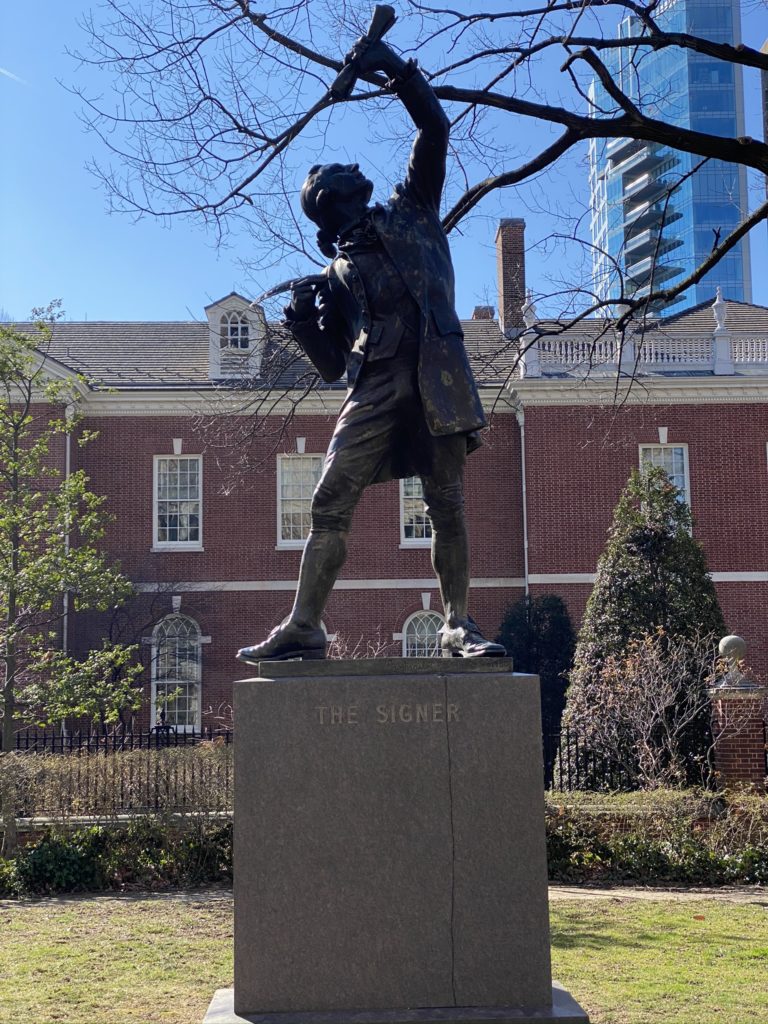
And lots of statues.
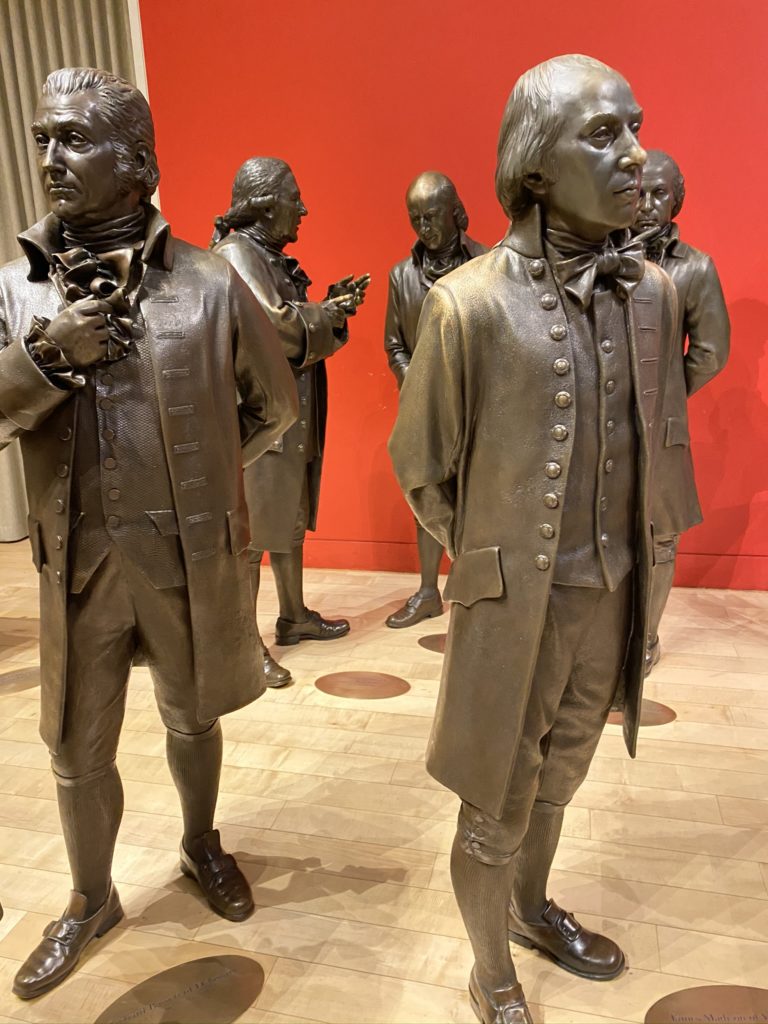
Afterwards, when we went inside the National Constitution Center, there were even more statues! I have to assume these men, important leaders during their day, were built according to their actual height (most seemed quite short). It was fun to walk around their very lifelike forms and look at all the details that were incorporated into the sculpture. Buttons! Shoe buckles! And cravats! (Yes, that’s what ties were called back then.)
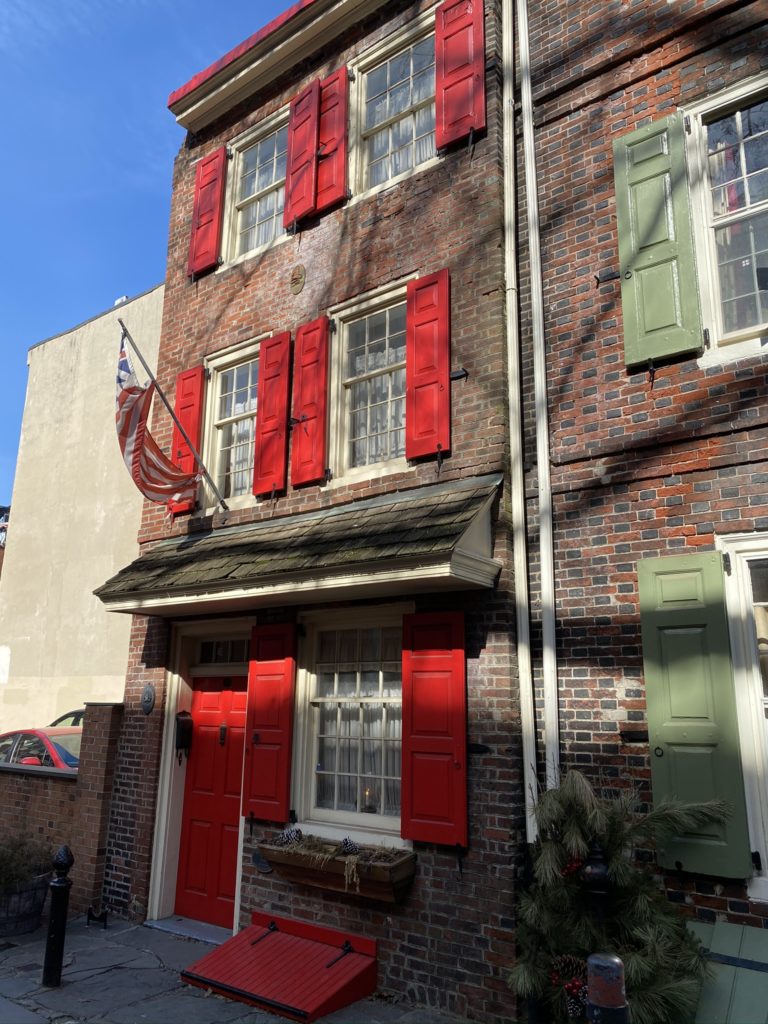
Afterwards we walked to Elfreth’s Alley, supposedly the oldest residential street in America. I was happy to see there was not a single piece of trash on this street! And the houses were nicely maintained.
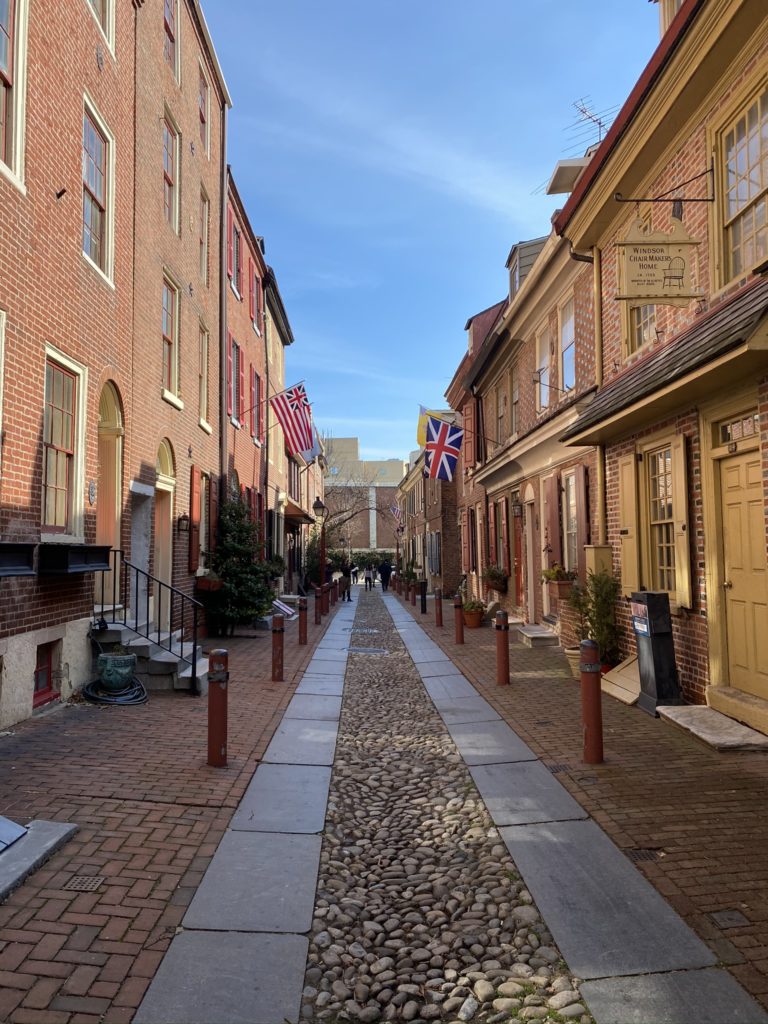
I love the red shutters and matching doors on this house.
Betsy Ross And A Fifth Grade Field Trip
In 1971 after being in Munich for two years, we moved back to New York briefly. I happened to be in fifth grade on Long Island when we had a class field trip to Philadelphia. I remember very little about the trip other than visiting the Betsy Ross house. I found a couple of photographs that I took nearly half a century ago and realized that the decrepit building that was next to her house is no longer.
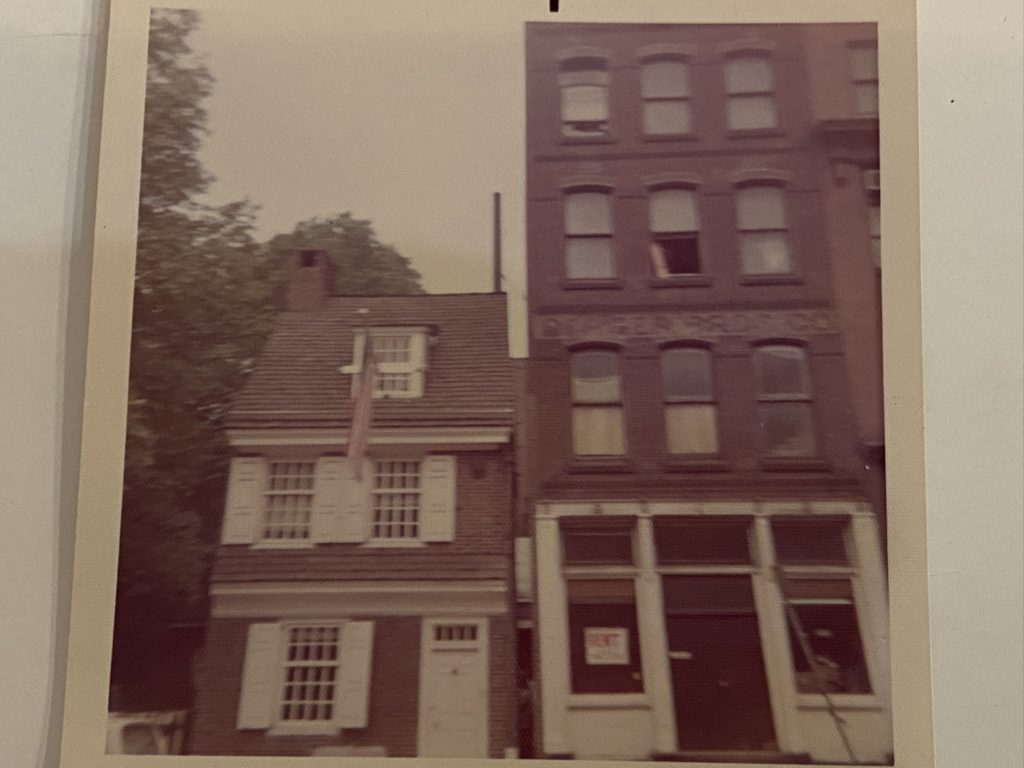
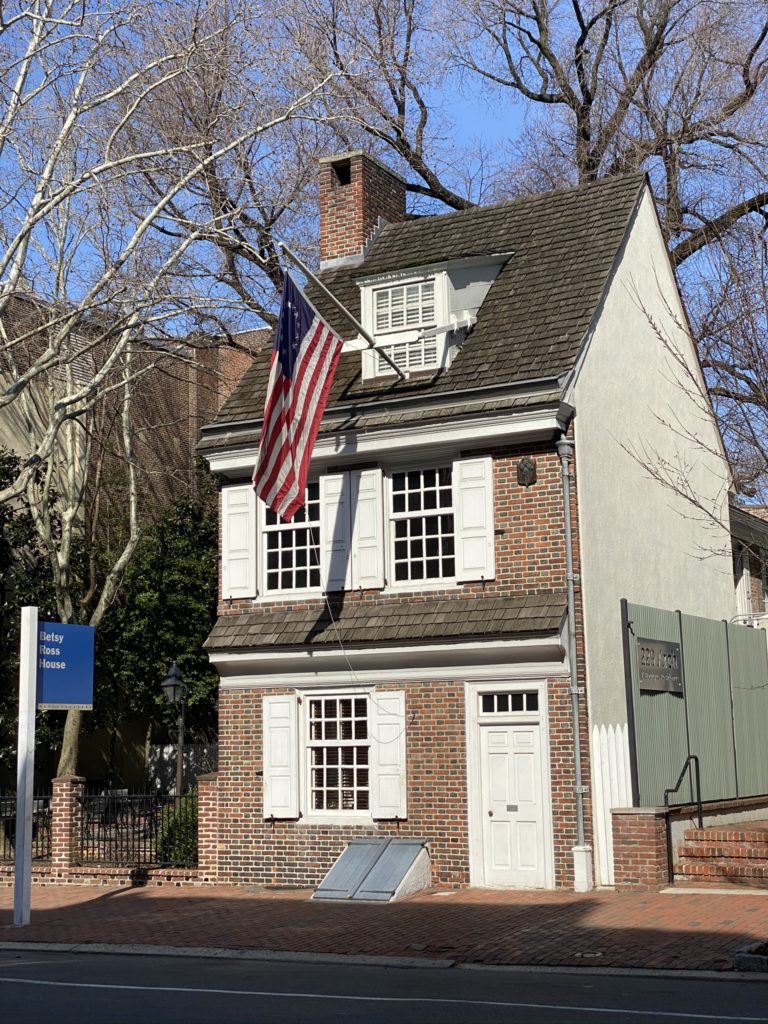
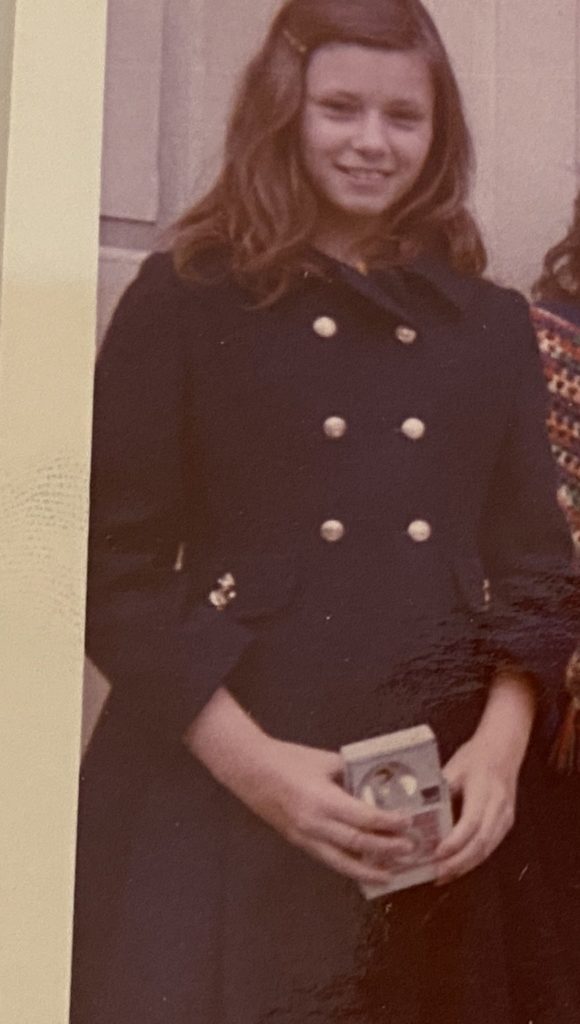
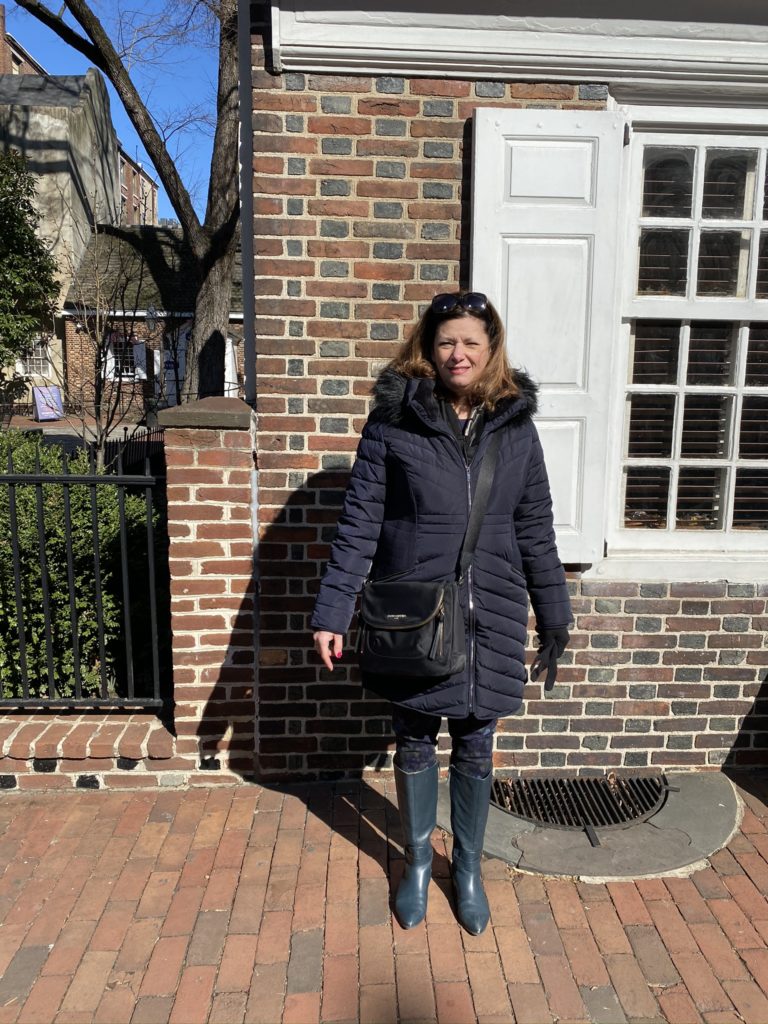
I also found a photograph of me in front of the house. Look at the blue “dress” coat with big brass buttons (although the sleeves do look a little short) I’m wearing. I decided to crop out of the photograph the other girls I was traveling with that day, but when I looked at the picture, I was the only student who had a camera in her hand! This photograph of me must have either be taken by a teacher or a parent who went along for the ride.
Here’s me today squinting in the sun with my hair nearly the same length! And wearing a blue (and much warmer coat) I purchased over the Christmas holiday.
After Betsy Ross, we grabbed a quick lunch (fish tacos and shrimp po’ boy’s) at Redding Terminal Market (no pictures it was too crowded) and then headed over to see the new Museum of the American Revolution. There was a lot of walking that day.
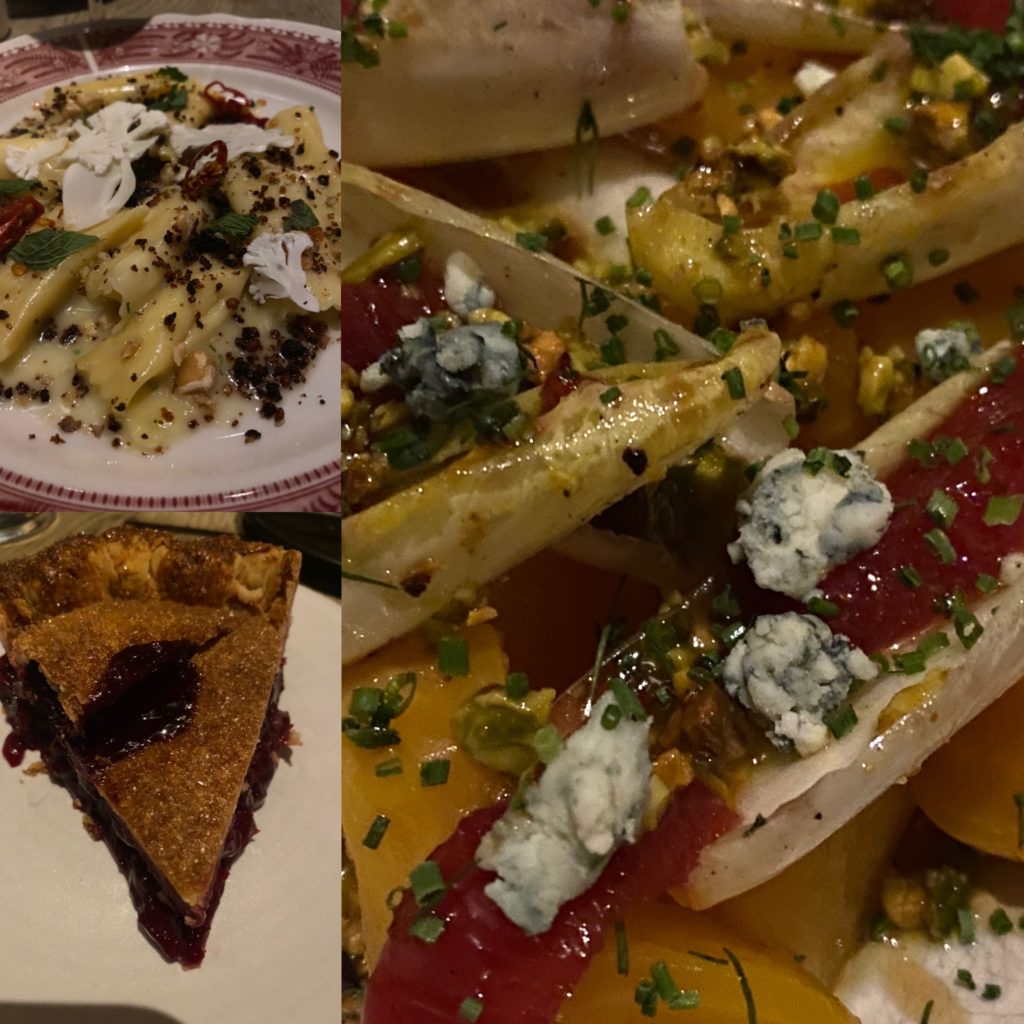
Dinner that night was at a restaurant I had been wanting to try for a while. High Street on Market is a cute little place with a small but very creative menu. Endive salad with golden beets, blue cheese, pistachios and blood oranges ? House-made agnoletti pasta with cauliflower, chili peppers and walnuts? Cherry pie? It was all pretty good and the only disappointing dish was a minuscule overpriced cheese plate which I won’t talk about.
Eastern State Penitentiary
We had never visited the famous prison and weren’t sure what to expect. They are doing extensive renovation work on the site which luckily didn’t seem to impact our visit at all. Once labeled the most famous and expensive prison in the world, what’s left is eerie and cold inside. Steve Buscemi, the actor, was the narrator on the audio tour as we walked around looking at the various cells and long hallways. We could only imagine what it was like being incarcerated back then.
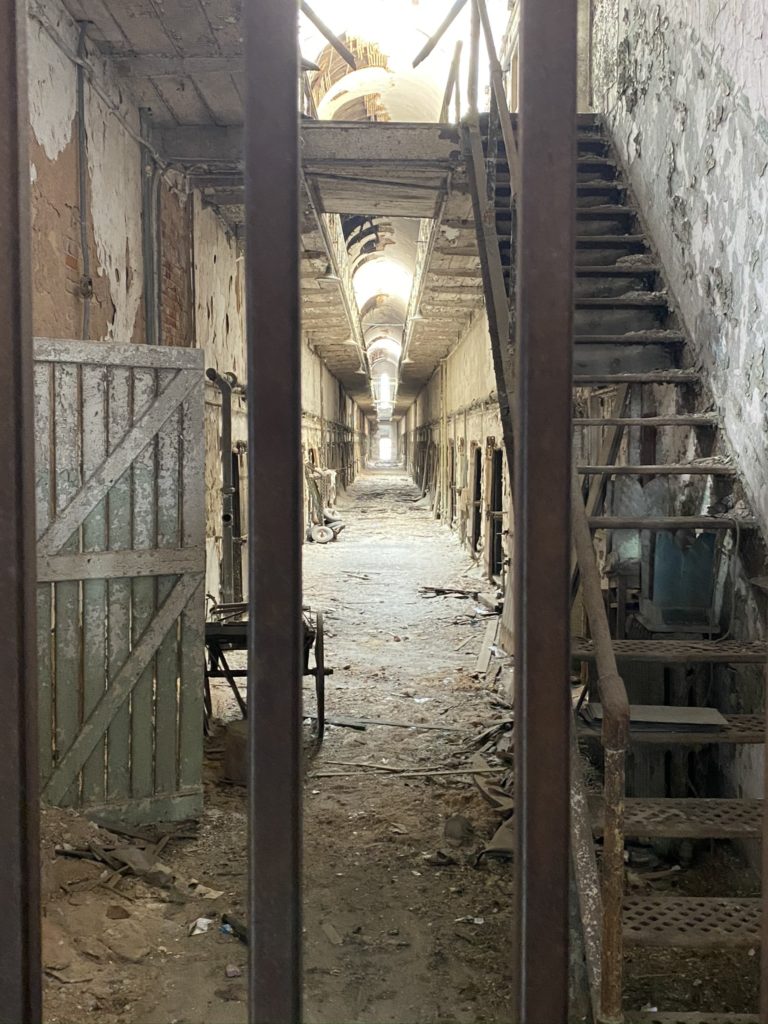
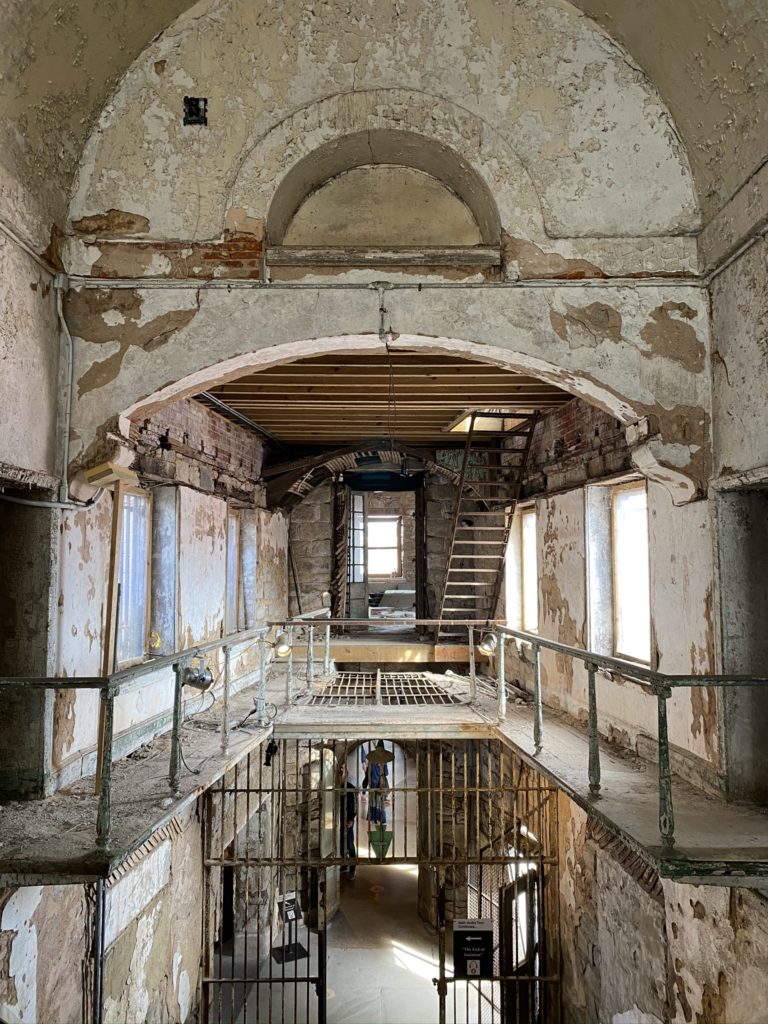
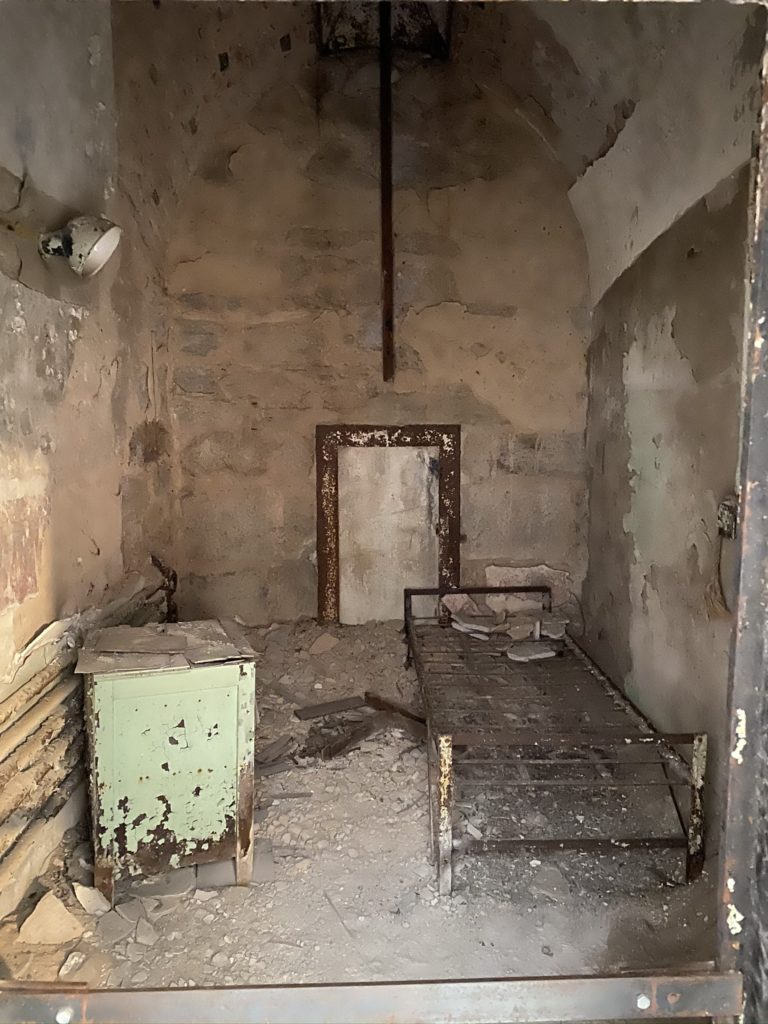
Here’s a shot of the kind of conditions other inmates were living in (minus the peeling paint and debris on the floor one would hope). And here’s a cell that the museum staff decided to recreate based on newspaper accounts of one of their more famous prisoners – Al Capone.
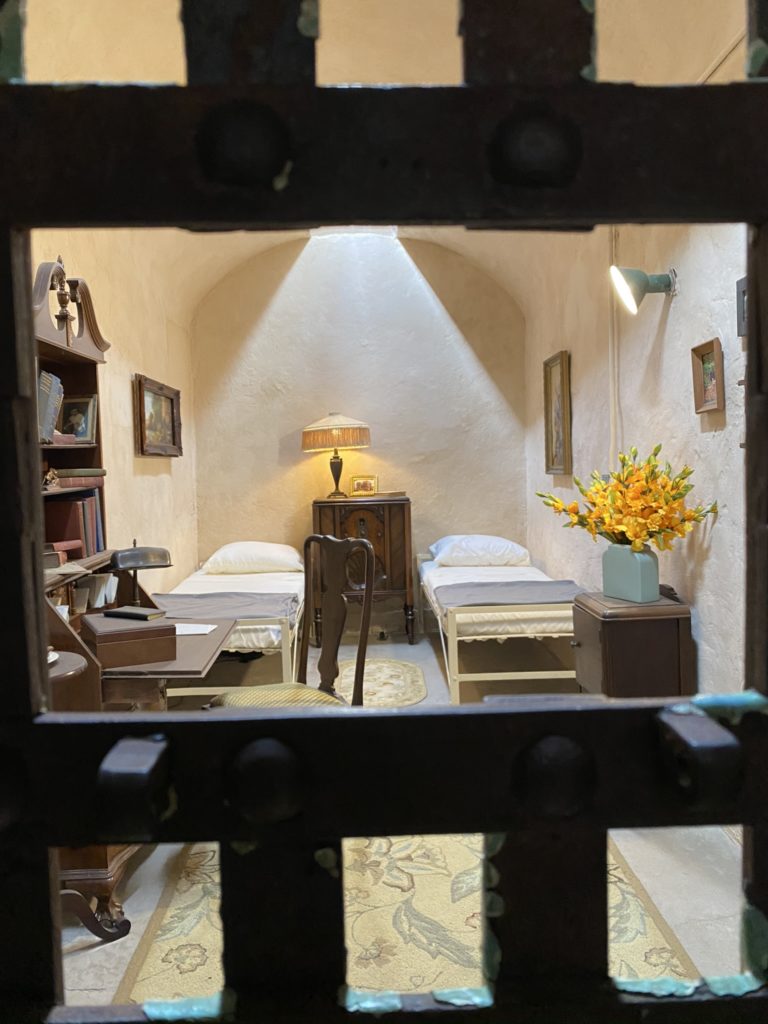
I mean, look at these pretty luxurious accommodations. Mr. Capone even had a desk and a radio and clean sheets as well as a couple of throw rugs to cover the cement floor!
The prison was huge and I didn’t feel particularly claustrophobic when I was inside even when I looked out the windows.
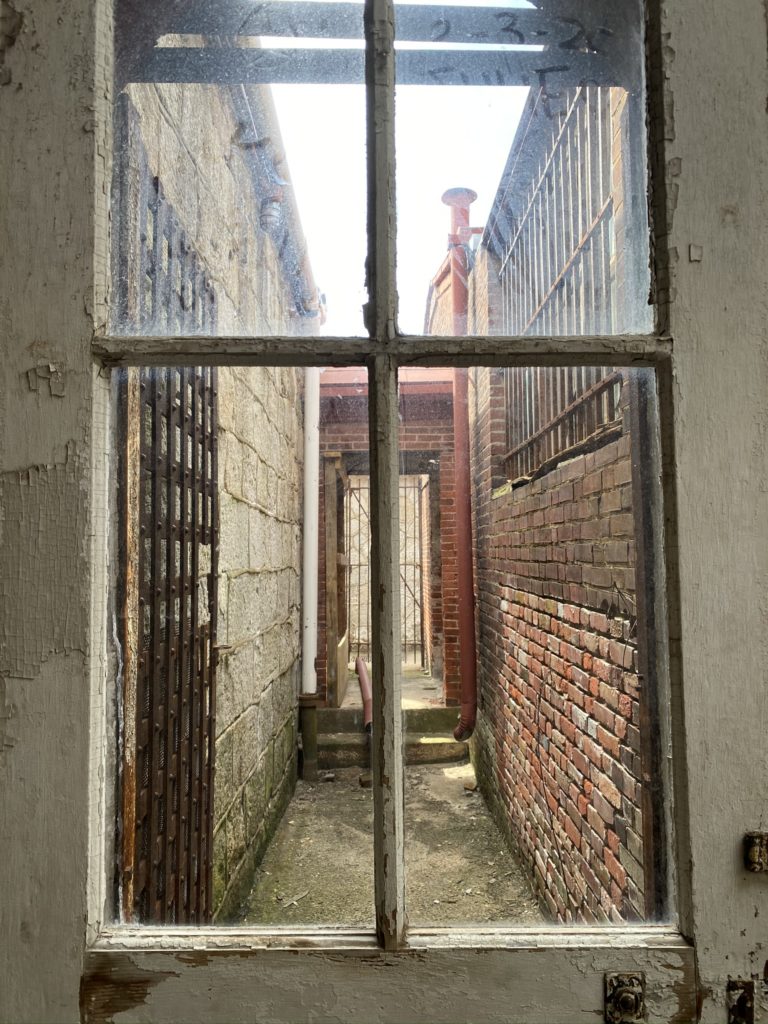
However, once I went outside and walked along the very high stone walls, the feeling to “escape” (especially when I saw the watch tower) did come upon me.
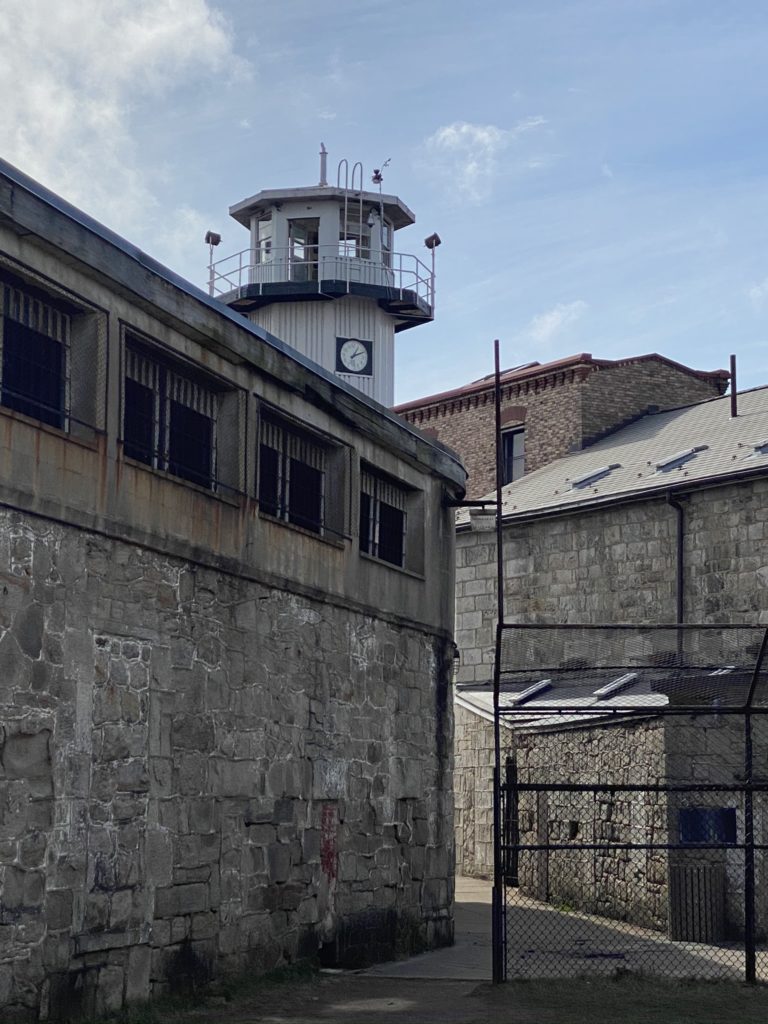
What do you do after you visit a prison? You go to lunch!
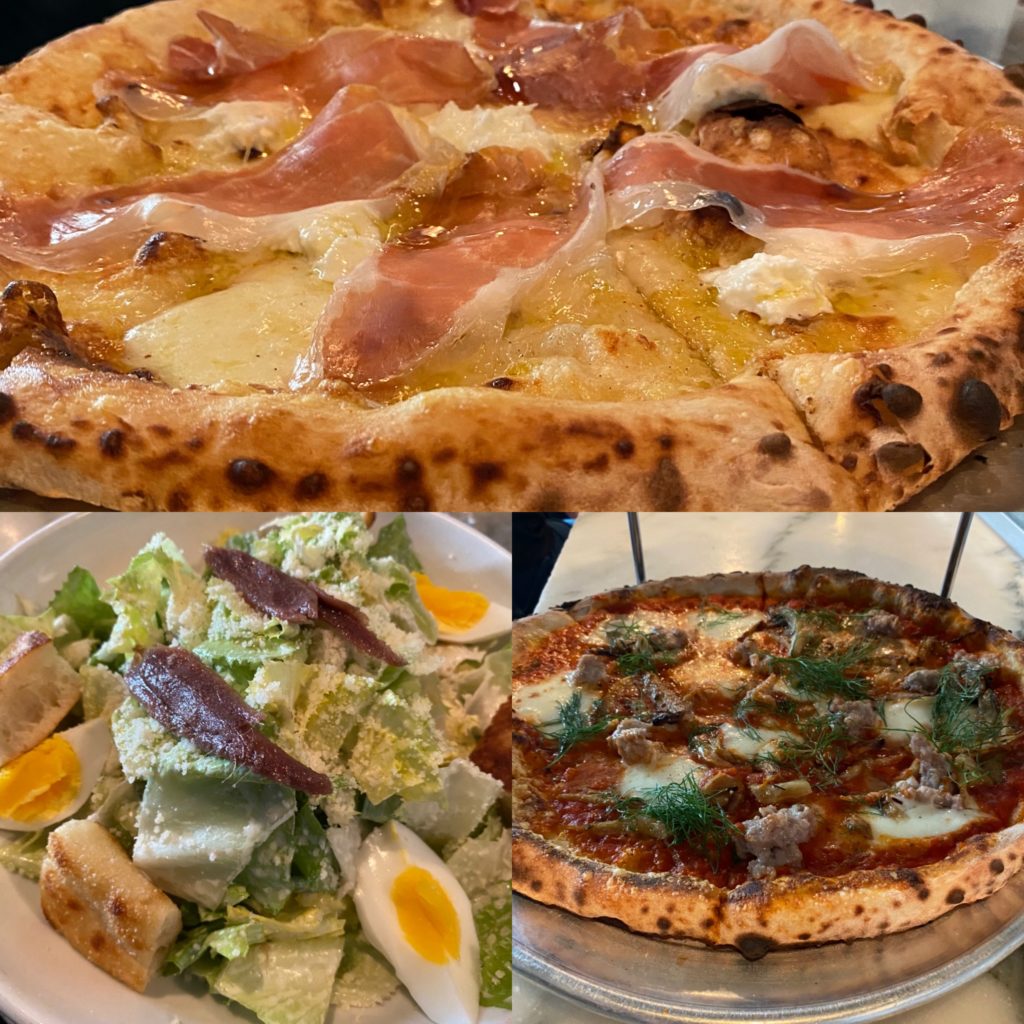
We decided to stop for pizza at the nearby Pizzeria Vetri. We got off to a rocky start with the wait staff (couldn’t get anyone to even notice we were sitting at the counter for a good 10 minutes) but once I got up to make our presence known we had a lovely lunch. They make pretty decent pizzas – one we had was topped with crudo and chunks of mozzarella di bufala. The other was a pie with fennel sausage (and some fennel fronds scattered on top) which I liked. Plus we had a decent version of Caesar salad with anchovies, lots of Parmesan and a hard boiled egg.
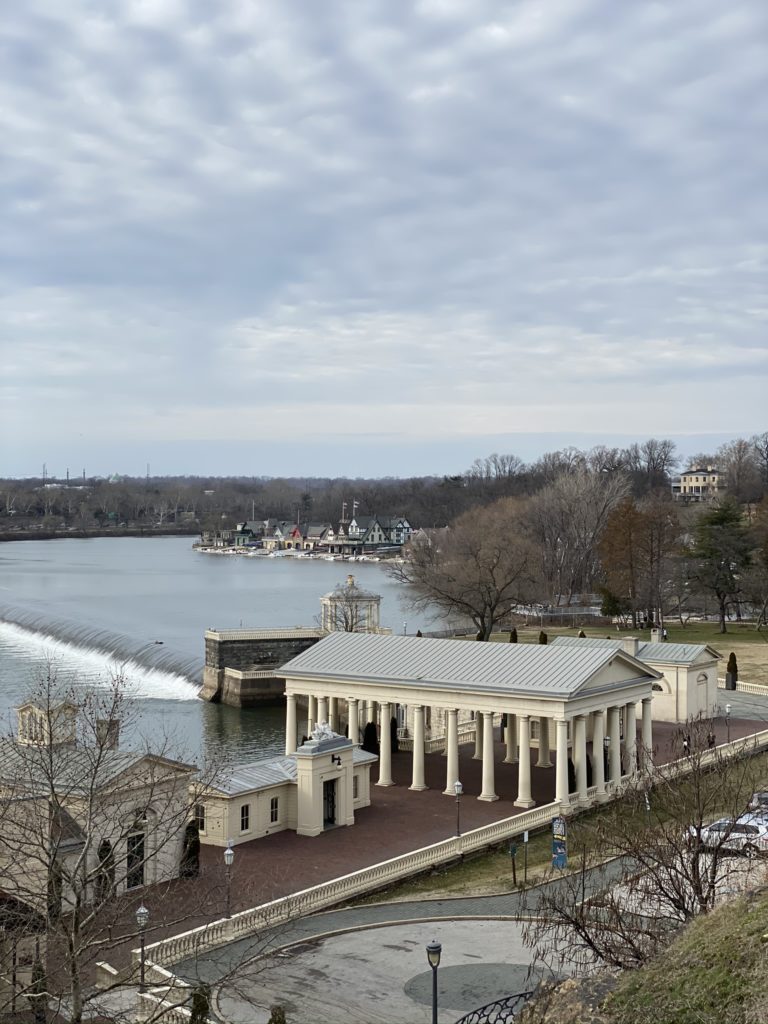
Afterwards we could have used a nap (big lunch plus wine plus 60 degree weather) but instead walked over to the famous (or should I say infamous) “Rocky” stairs at the Philadelphia Museum of Art. We even saw a “Rocky” impersonator taking pictures with some tourists. Then we walked around the back of the building to get a view of the Fairmount Water Works complex on the Schuylkill River.
Frank Lloyd Wright
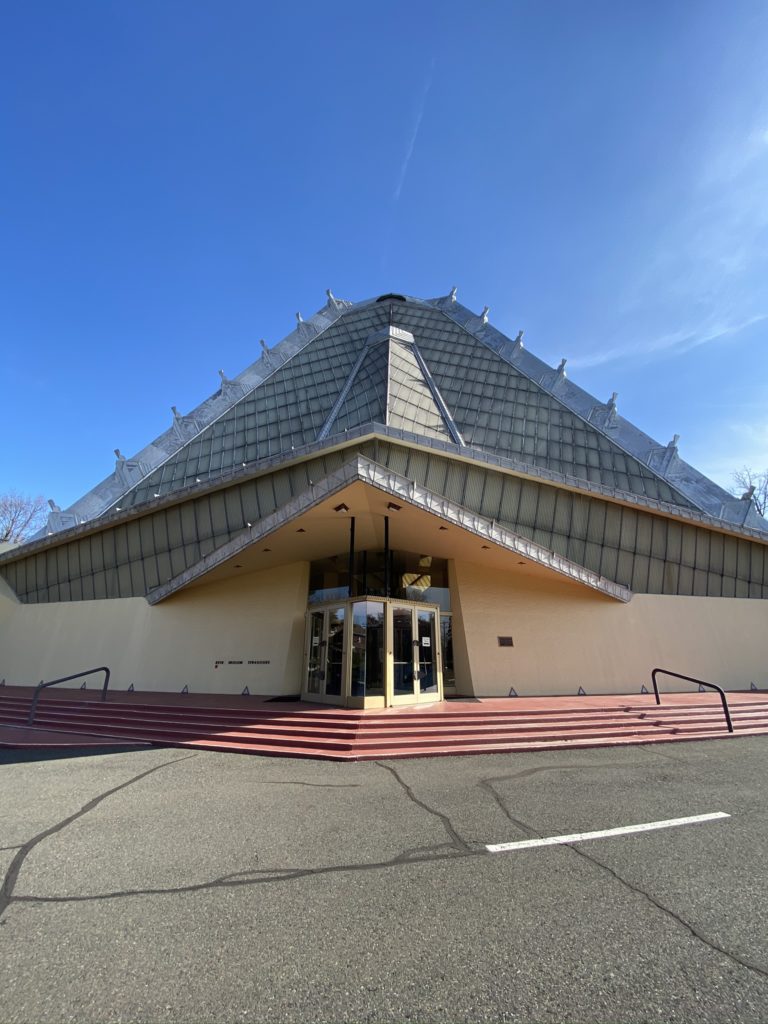
The next morning on the way out of town we stopped to see the only synagogue Frank Lloyd Wright designed. Located in Elkins Park, PA, the Beth Sholom Synagogue is very different (at least in my opinion) than any of his other work. Described as being designed in a “Mayan Revival style,” the roof rises up like a mountain with carved cement-looking stones jutting out on the sides. Unfortunately, there weren’t any tours scheduled that day so we couldn’t peek inside.
Henry Mercer and Fonthill Castle
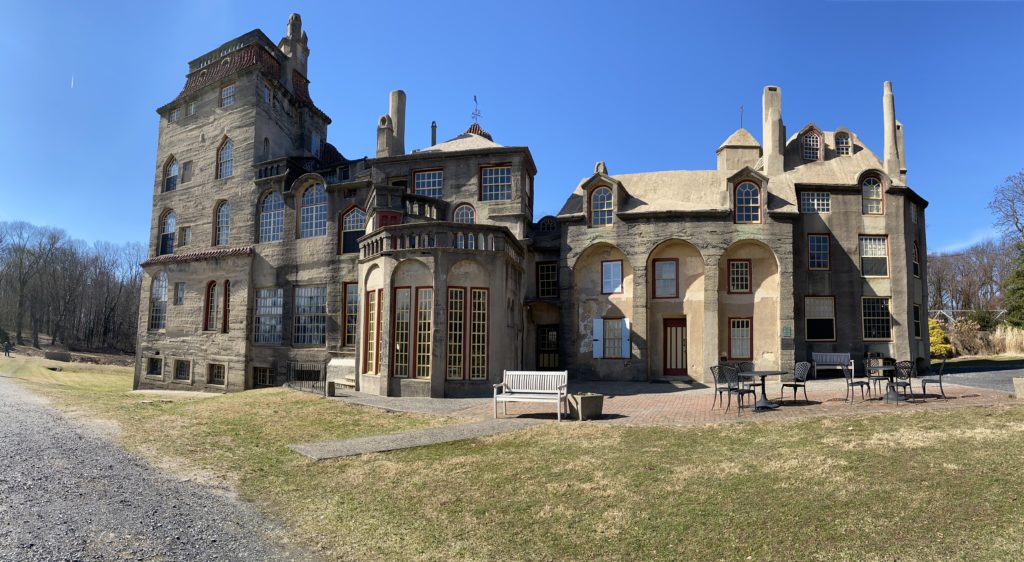
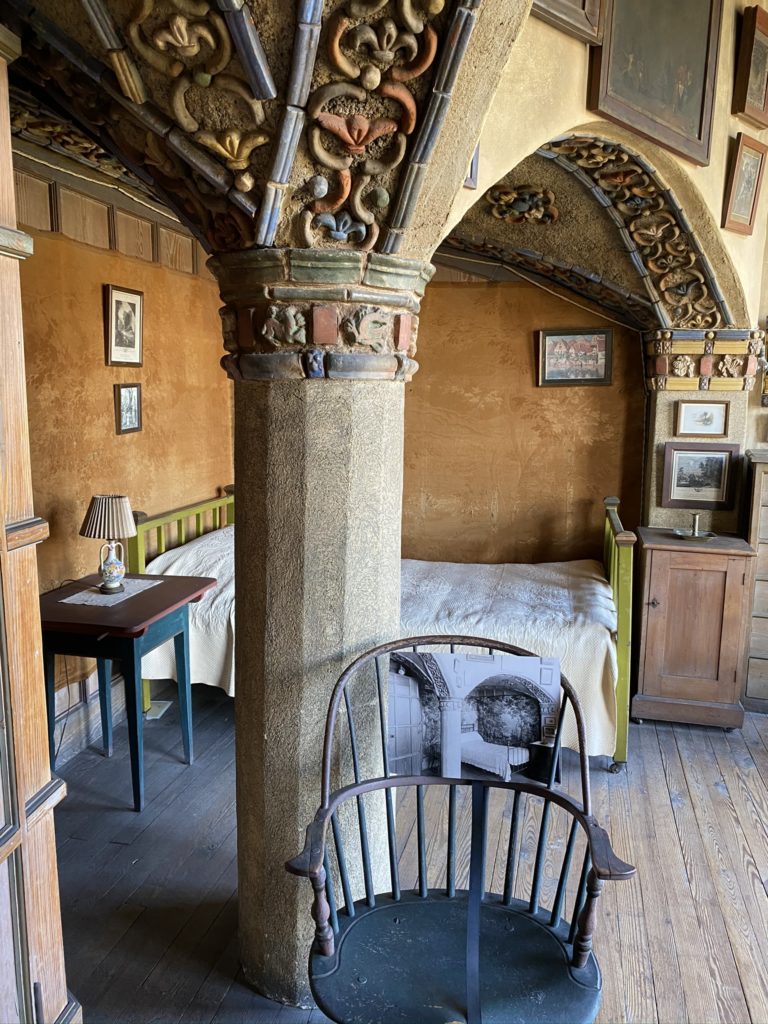
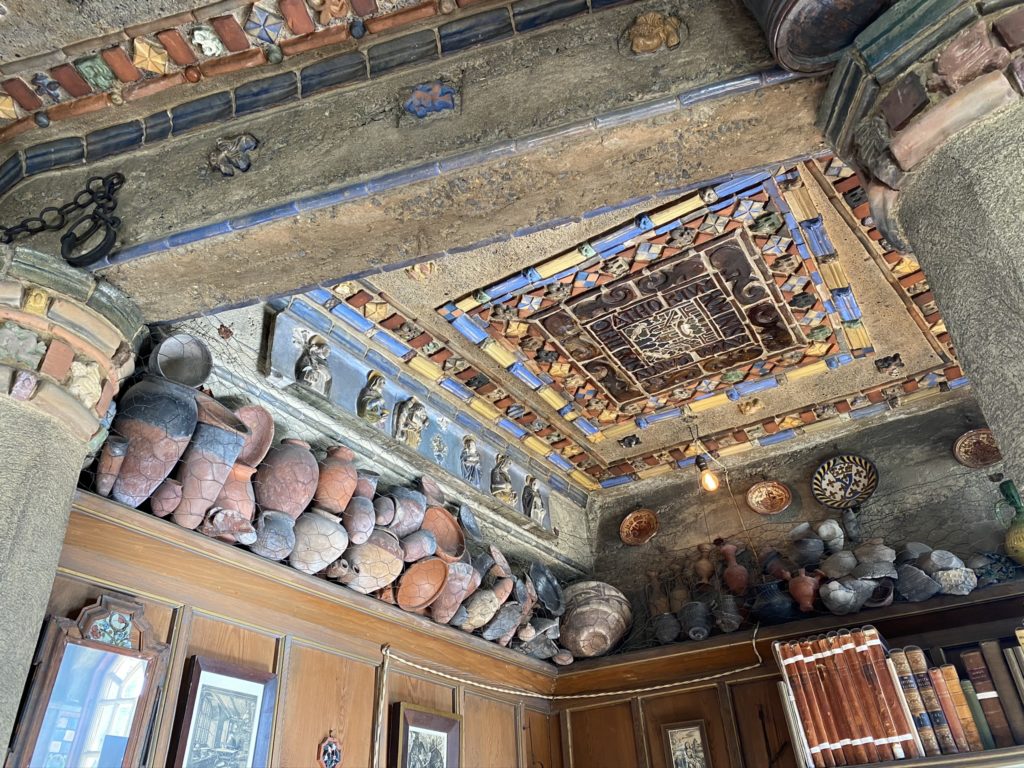
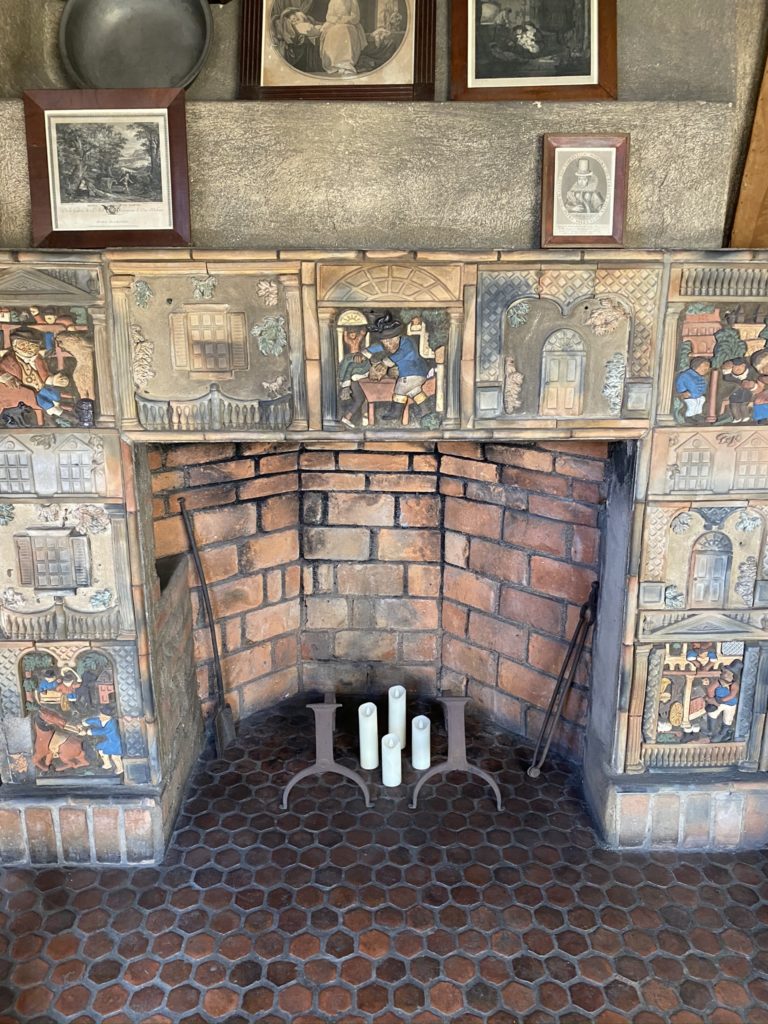
We had originally intended to stop off in Doylestown, PA, on the way to Philadelphia but decided we didn’t have enough time so we decided to do it on the way home. I had seen pictures of Fonthill Castle and thought it looked a bit strange. Built between 1908-1912, Henry Mercer had the house built entirely out of reinforced concrete. He then filled the castle with Moravian tiles that he designed as well as other tiles and prints that he collected from around the world. There were so many rooms to look at that were literally crammed with (for lack of a better word) – stuff. There were also some amazing staircases, vaulted ceilings and a couple of built-in furniture pieces that I thought were pretty neat. I took quite a few photographs of this “house” so I’ll just share a few of them with you.
Here’s a panoramic shot of the house. Luckily we had a beautiful sunny day which really helped the gray cement structure stand out against the blue sky.
This was the “yellow” room, Henry’s first bedroom in the castle. I love the arches and the columns he made in this room. And look at this crazy ceiling in the next photograph with all those different types of tiles and ceramic pots he had collected.
Then there were the fireplaces, 17 in total I believe.
Besides his enormous display of books, my favorite room was his office. It held four desks! One for paying bills, one for writing (complete with a typewriter), one for drafting and the final one for correspondence. Guess which one this is? (Hint: drafting.)
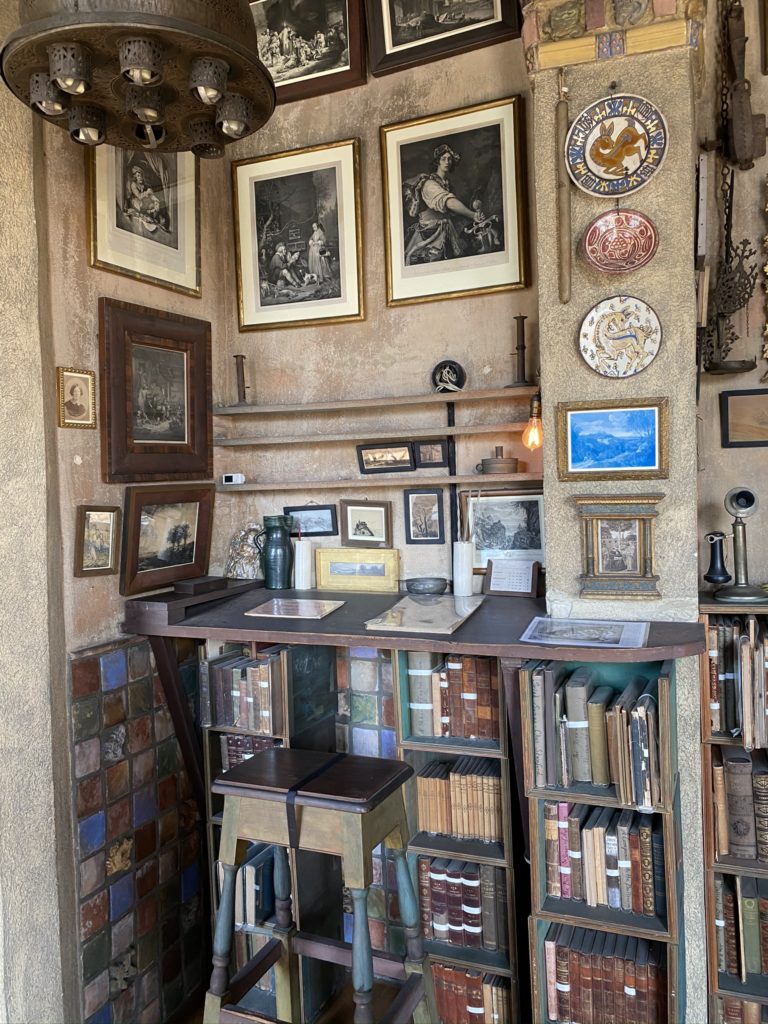
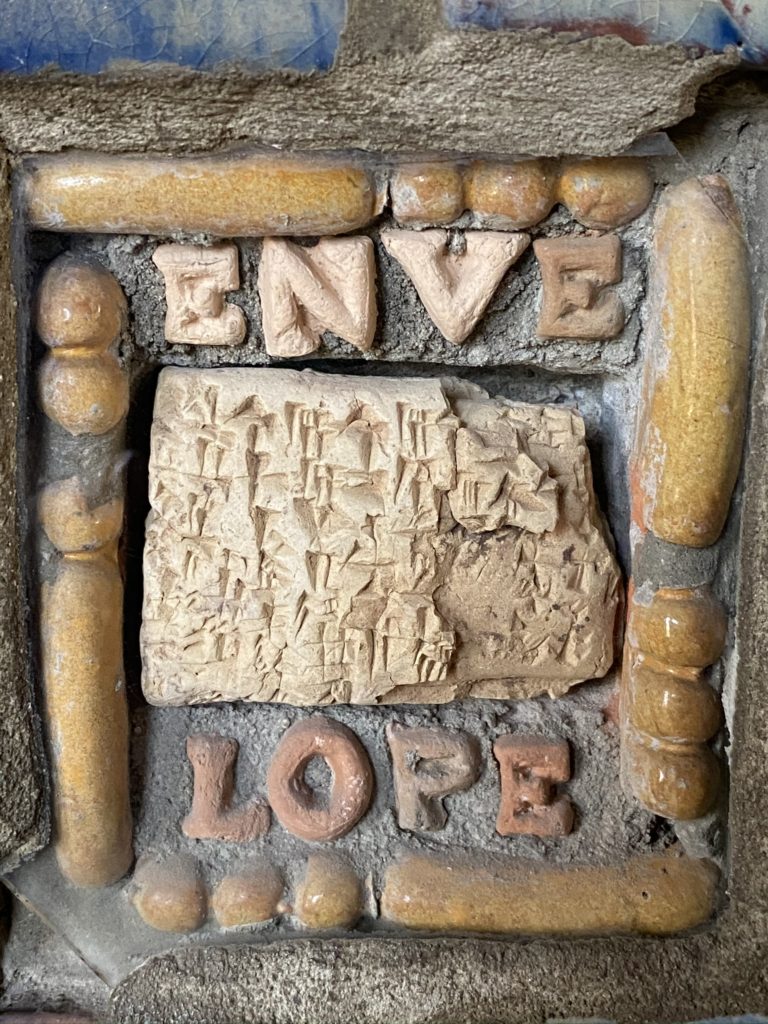
In fairness, I found this house overwhelming, there was just too much to look at and digest. I found one small tile on the tour though that I found amusing. Was he making fun of himself? Or was it a literal statement of his love of letter writing? Who knows.
Until our next “Let’s Go” adventure.